
Resale Value Price Check・Cluzy
Victor EduLifestyle
4.658.00 Reviews
- Version
- 1.0.7
- Installs
- 10.00K
- Age Rating
- Everyone
Screenshots
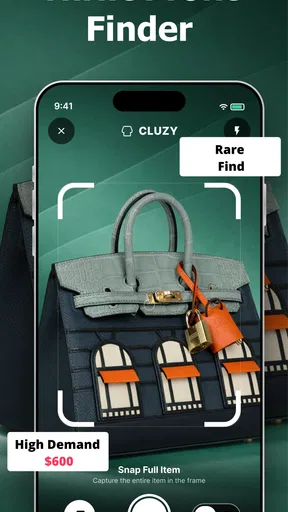
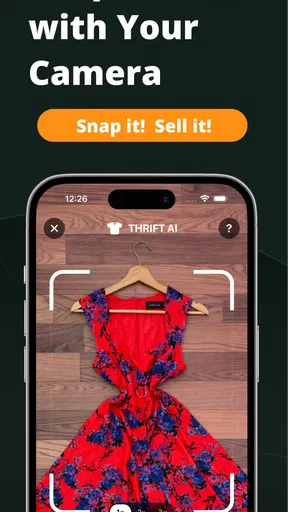
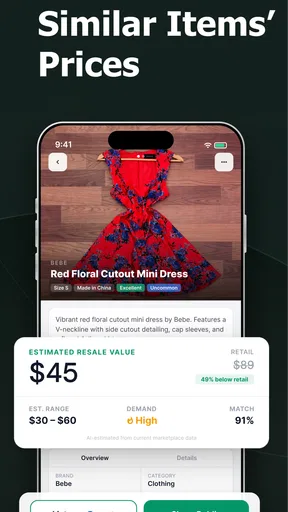
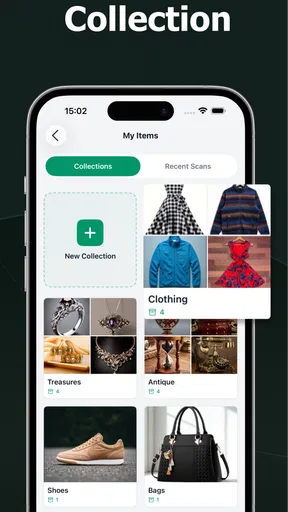
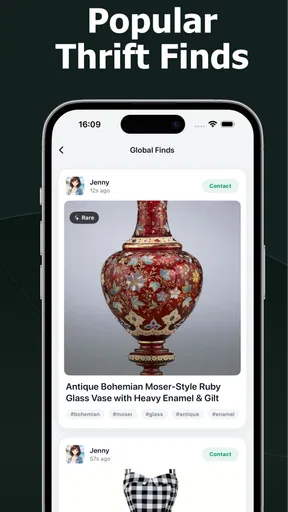
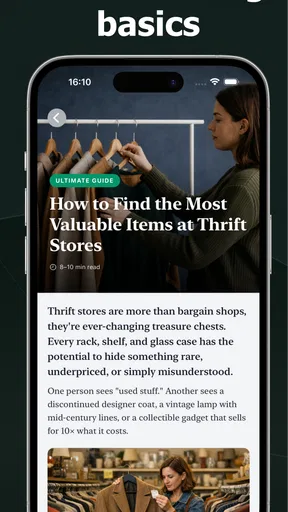
Our Review of Resale Value Price Check・Cluzy
 Analysis by Appyee
I tried Resale Value Price Check・Cluzy as a practical companion for moments when an ordinary object might be worth more than it looks. Its purpose is easy to understand: use your phone to examine an item, identify a possible match, and get a sense of its resale value before deciding whether to buy, keep, list, or walk away. That makes it especially interesting for estate-sale shoppers, thrift-store regulars, flea-market hunters, and anyone who occasionally finds an unfamiliar item at home.
Cluzy is a free lifestyle app from Victor Edu, with optional in-app purchases ranging from $5.99 to $89.99 per item. It is rated for Everyone, so the concept is approachable even if you have never sold anything online. The current release is version 1.0.7, and the app has reached over 10,000 installs with an average rating of 4.6 from around 1,200 ratings. Those figures suggest a promising early audience, but I still see this as a focused tool rather than a complete resale business platform.
How Cluzy fits into a real buying decision
The most useful way to think about Cluzy is not as an automatic pricing authority, but as a fast first filter. When I encounter a box of old kitchenware, a decorative object, a piece of clothing, or a gadget with an unclear model name, the first problem is usually identification. Until I know what the item is, searching for sold listings or comparing prices is inefficient. A camera-based check can shorten that first step.
A realistic example is an estate sale where several similar-looking objects are grouped together. Instead of guessing from appearance, I would scan each promising item, note the suggested identity, and then inspect the details that affect resale potential. That workflow helps me avoid spending time on objects that are common, incomplete, or difficult to describe. It also gives me a more disciplined reason to leave an item behind when the likely resale value does not justify the effort.
The app’s strongest appeal is speed. Traditional research means opening a browser, trying several search phrases, checking image results, and then separating asking prices from actual market evidence. Cluzy puts the recognition step first. That is valuable when I am standing in a crowded shop and need a rough answer before someone else takes the item.
Still, a scan should be treated as a starting point. Resale value depends on condition, completeness, size, shipping difficulty, local demand, authenticity, and timing. Two objects with the same general appearance can have very different prices. I would use the app to create a short list of candidates, not to make a purchase solely because a number looks attractive.
The current experience is built around quick discovery
Cluzy feels most relevant when I need an answer in the moment. Its store summary focuses on scanning items to find resale value, identifying finds at estate sales, and checking prices. That combination points to a practical, camera-led workflow rather than a catalog for collectors or a full listing manager for professional sellers.
For a casual user, the low barrier matters. The app is free to install, and its Everyone rating makes it suitable for a household where different people may use it to investigate objects. The minimum operating-system requirement is Android 8.0, which also makes the app accessible to many older phones. I would nevertheless expect recognition quality to depend heavily on lighting, camera clarity, the angle of the object, and whether important markings are visible.
My preferred approach is to photograph the item in context first, then make a second attempt with the most important identifying detail centered in the frame. A maker’s mark, model label, serial plate, fabric tag, or distinctive underside can be more useful than a decorative front view. This is one of the less obvious habits that makes a scan more useful: the best image is not always the prettiest image.
Three practical habits that improve the results
First, I would clean the lens and avoid scanning through reflective glass or plastic whenever possible. Glare can hide the very marking that separates one version from another. If the object is fragile or still belongs to a seller, I would photograph it without moving it and use the result as a preliminary clue rather than handling it aggressively.
Second, I would scan related pieces separately. A set of dishes, a bundle of books, or a group of accessories may look like one resale lot, but individual items can carry different value. Checking the most distinctive piece first helps reveal whether the group is worth researching further. This prevents a common mistake: assuming that an attractive collection is valuable simply because it is complete-looking.
Third, I would record condition immediately after the scan. Cluzy can help me think about what an object might be, but it cannot turn scratches, missing parts, odors, repairs, or faded finishes into a higher price. A quick note in my phone about defects keeps the initial excitement from influencing the final decision. For resale, the gap between “identified” and “sellable” is often where the real work begins.
Where it differs from ordinary search tools
Searching manually still has an important advantage: I can choose precise words and deliberately compare several interpretations. That is particularly useful for niche collectibles, regional products, or items whose value depends on a small variation. A standard search engine is also better when I already know the manufacturer and model and want to study market history in depth.
Cluzy is more convenient at the beginning of the process. It is aimed at the moment when I am holding an object and do not know what to call it. Instead of inventing a description, I can use visual information to form a research direction. In that sense, it complements browser searches rather than replacing them.
It also differs from dedicated selling platforms. A marketplace account is designed for creating listings, communicating with buyers, arranging payment, and completing a sale. Cluzy’s value is earlier in the chain: deciding whether an object deserves that effort. If I need inventory management, shipping calculations, buyer messaging, or sales records, I would choose a dedicated resale service instead.
What the current release means for different users
Version 1.0.7 gives the app a clear identity, but it is still best approached as a focused utility. The release date was January 14, 2026, so the product is relatively new. I see that as both an advantage and a reason to keep expectations measured. A newer app can feel direct because it is centered on one job, while mature alternatives often offer more surrounding tools but also more clutter.
For an occasional shopper, the current state is appealing. I can imagine opening it a few times during a weekend of estate sales, using it to narrow down possibilities, and then doing more careful research later. Someone who sells only a handful of items each month may appreciate that it helps with the initial identification without requiring a complicated setup.
For an experienced reseller, the value is more selective. If I already recognize common brands, know how to inspect condition, and have a reliable research routine, the app may save time only on unfamiliar categories. Its role would be strongest as a second opinion or a discovery shortcut, not as the central system for sourcing inventory.
Collectors should be cautious about treating visual recognition as authentication. A scan may suggest an object’s identity, but authenticity can involve provenance, construction details, edition marks, materials, and expert inspection. When the purchase price is high or counterfeits are common, I would use Cluzy to generate leads and then seek stronger evidence before paying.
The free entry point is useful, though the optional purchase range deserves attention. Since paid items can extend from $5.99 to $89.99, I would check exactly what a purchase unlocks before committing. A casual user should not assume that a promising first scan requires an expensive upgrade. The sensible approach is to test the free experience with low-risk objects and decide whether the additional value matches the frequency of use.
What existing users are likely to notice
People already using an earlier release should notice the importance of version 1.0.7 more as a sign of ongoing product refinement than as proof of a particular new feature. I would not promise a dramatic transformation based only on the version number. What matters in practice is whether scans feel consistent, whether item suggestions are understandable, and whether the path from recognition to price checking remains quick.
For returning users, the best way to judge the current release is to revisit familiar objects rather than relying on one exciting find. Try a clearly labeled item, a partially obscured item, and an object with a distinctive mark. That small test reveals whether the app is useful for your own categories. It also separates a genuinely helpful workflow from a single lucky identification.
I would pay attention to how much manual verification remains after each scan. If Cluzy gives me a useful name and direction, it has already done something worthwhile. If I still have to repeat the entire identification process elsewhere, its advantage is smaller, though it may still be convenient in the field.
Important gaps before relying on a suggested value
The largest limitation is the difference between an estimated resale value and money that I can realistically receive. A high online asking price does not guarantee a sale. Platform fees, packing materials, postage, returns, local competition, and the time spent answering questions can reduce the actual result. I would calculate the likely net amount separately before buying inventory.
Condition is another major gap. A camera can recognize a product family while missing a cracked component, replacement part, non-working mechanism, or incomplete set. I would inspect function and completeness myself. For electronics, I would look for model labels and test the device. For clothing, I would inspect size, fabric, stains, and wear. For collectibles, I would compare marks and construction rather than trusting appearance alone.
There is also a trade-off between speed and context. A quick scan is excellent for triage, but it may not understand why one regional edition or discontinued variation is more desirable than a visually similar standard version. This is where specialist communities, sold-listing research, auction archives, or an experienced dealer can be better choices.
Privacy and permission decisions also deserve ordinary caution. I would avoid photographing personal documents, addresses, faces, or unrelated belongings in the background. When scanning at someone else’s home or sale, I would ask before taking close-up images. That is not a criticism unique to Cluzy; it is simply good practice for any camera-based shopping tool.
Who should use it, and who should skip it
I would recommend Cluzy to curious shoppers who want a faster way to identify unfamiliar finds. It makes particular sense for people who enjoy estate sales but do not yet know the language of resale research. It can also help a family sort through inherited household items by giving everyone a shared starting point for deciding what deserves closer investigation.
I would be more cautious recommending it to a professional seller who expects precise market intelligence for every category. That user may need sold-price history, fee calculations, inventory tracking, barcode support, or specialized authentication. A dedicated resale workflow will usually be stronger once the item has been identified.
I would also skip it for impulse buying. If a scan produces an exciting estimate, pause and ask three questions: can I verify the exact model, can I inspect the condition, and can I sell it after all costs? If any answer is unclear, the app has not finished the job. It has only helped frame the next questions.
What I would watch as the product develops
Because the app is still early in its life, I would watch whether future releases improve the bridge between recognition and responsible pricing. Useful progress would include clearer distinctions between an item’s identity and its condition, stronger guidance for checking comparable sales, and a transparent explanation of why a suggested value changes. Those improvements would make the tool more educational, not merely faster.
I would also watch how the optional purchases affect the everyday experience. The best balance would let occasional users investigate ordinary finds without feeling pushed into a costly commitment, while giving frequent sellers a clear reason to pay. The range from $5.99 to $89.99 means that understanding the purchase structure matters before making Cluzy part of a regular sourcing routine.
My final view is positive but practical. Cluzy is a useful first-pass companion for turning an unknown object into a researchable lead. It is free to try, simple in concept, and well suited to the pressure of an estate sale or thrift-store aisle. Its real strength is helping me decide what deserves attention; its weakness is that recognition alone cannot settle authenticity, condition, demand, or profit.
Use Cluzy as a smart filter, not as a promise of easy money. If you enjoy finding overlooked items and are willing to verify the details yourself, it can make the search more focused and enjoyable. If you need professional-grade pricing evidence or a complete selling operation, pair it with manual research or choose a specialized resale platform. That honest division of labor is where this app makes the most sense.
Verdict
Strengths of Resale Value Price Check・Cluzy
- Quickly estimates resale prices for used items
- Useful for checking potential profit before buying
- Simple interface makes price checks easy
- Helps compare market value across different products
- Convenient for sellers preparing listings
Limitations of Resale Value Price Check・Cluzy
- Estimates may vary from actual selling prices
- Coverage can differ by product category and region
- Some features may require a subscription
- Results depend on accurate item details
- Market prices may become outdated quickly
Similar Picks in This Category
View All
SmartThings
Samsung Electronics Co., Ltd.4.6

Google Home
Google LLC4.0

Pinterest4.2

Astrotalk - Talk to Astrologer
Astrology & Horoscope4.7

My Verizon
Verizon Consumer Group4.5

Samsung Wallet (Samsung Pay)
Samsung Electronics Co., Ltd.4.1
Frequently Asked Questions
What is Resale Value Price Check・Cluzy?
Resale Value Price Check・Cluzy is designed to help users estimate the resale value of items before buying, selling, or listing them online. The app can be useful for comparing market prices, checking whether a product appears fairly valued, and making more informed decisions. Its usefulness may depend on the product category, available market data, location, and the accuracy of the information entered.
How does Cluzy estimate an item's resale price?
Cluzy generally relies on details such as the item category, brand, model, condition, age, and possibly comparable listings or recent market activity. To receive a more realistic estimate, enter information carefully and describe defects honestly. A suggested price should be treated as a reference rather than a guaranteed selling amount, because demand, timing, shipping costs, location, and negotiation can significantly affect the final price.
Can I use Resale Value Price Check・Cluzy for any product?
The app may support a range of commonly resold products, but coverage is not necessarily identical across every category, brand, or region. Before depending on an estimate, check whether the specific item type and model are recognized. Unusual, collectible, customized, damaged, or very old products may produce less reliable results because they can have limited comparable listings or highly variable buyer demand.
Is Cluzy useful for selling items online?
Yes, the app can be useful when preparing an online listing because it may help you choose a starting price and understand how your item compares with similar products. However, it should not replace checking current listings on the marketplace where you plan to sell. Consider platform fees, delivery expenses, taxes, item condition, included accessories, and the possibility that buyers will negotiate before setting your final price.
Is Resale Value Price Check・Cluzy free and safe to use?
Availability of free features, subscriptions, advertisements, or in-app purchases can vary by platform and may change over time, so review the store listing before downloading or starting a trial. Also check the app’s privacy policy and requested permissions. Avoid entering unnecessary personal or financial information, and remember that any price estimate is informational; it does not guarantee a sale or protect you from marketplace scams.
